
Start With Segments, Ecosystems and Problems — Not Just an Idea or MVP

Short answer: startups that first identify their customer segment, then map the customer ecosystem, then define a validated problem build more fundable ventures than teams that jump straight from idea to MVP. This order grounds your MVP in evidence, keeps you from building for the wrong customer, and gives investors proof of fit.
KEY TAKEAWAYS 1. Know who you serve before you open Figma or write code. 2. Map the system around that customer — partners, channels, gatekeepers, regulation. 3. Validate a real problem, then let your MVP test the business model, not just the product. |
IN THIS ARTICLE
In many startup stories you'll hear: "I had a great idea, built an MVP, and went to market." That timeline — Idea → MVP → Selling — is comfortable, familiar, and glorified by many accelerators and lean-startup frameworks. But if you're taking part in a Venturethon and aiming for a fundable, scalable, sustainable venture, the sequence Segment → Customer ecosystem → Problem isn't just helpful — it's critical.
Idea → MVP vs. Segment → Ecosystem → Problem
Idea → MVP → Selling | Segment → Ecosystem → Problem | |
Starts with | A solution you like | A customer you understand |
MVP role | A prototype to show off | An experiment that tests one assumption |
Main risk | Building for the wrong audience | Spending a few weeks on research first |
Typical outcome | Late, costly pivots | Evidence investors can trust |
Here are five reasons this shift in sequence gives you an edge — and how it lines up with research and practice in startup building.
01
Identify the right customer segments
A strong business model begins with who your customer is. In the Business Model Canvas tradition (Osterwalder & Pigneur), "Customer Segments" is one of the earliest blocks. Slávik, Bednár & Mišúnová Hudáková (2021) found that many early-stage firms fail because the business model was incomplete — often due to weak customer-segment definitions (MDPI).
Likewise, Denoo et al. (2022) showed that a young firm's customer portfolio breadth significantly influences how its business model evolves and succeeds (Strategic Entrepreneurship Journal).
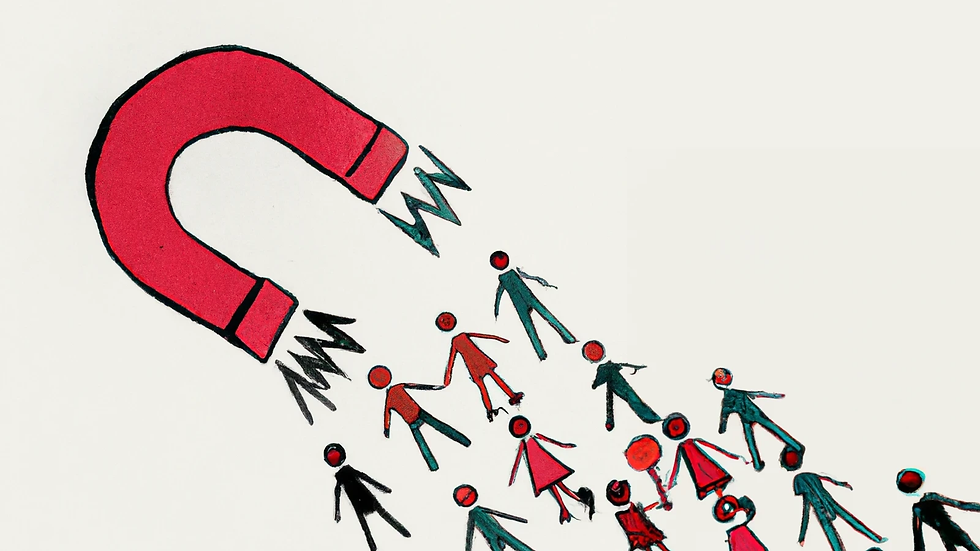
IN VENTURETHON TERMS Before you pull up Figma or start coding, map out who you believe your customers are. Segment by job-to-be-done, context, size, willingness to pay and adoption dynamics. Getting this wrong means building for the wrong audience — and wasted MVP cycles. |
02
Understand the customer ecosystem
Segment identification gives you who. Ecosystem mapping gives you where and how. Your customer sits inside a network of influences: partners, regulators, intermediaries, channels, competing products and adjacent players. Brunner (2025) argues that the first pillar of a business model is the target customer, including the ecosystem around them — intermediaries, value networks and end customers.
Leading accelerators such as Y Combinator and Techstars encourage founders to map not just the end user, but the entire value chain: suppliers, key partners, regulatory gatekeepers, channel partners, adopters and influencers.
IN VENTURETHON TERMS Build a customer ecosystem canvas: who influences the segment, who enables or blocks adoption, which channels matter, and what infrastructure or regulation applies. Do this before your MVP and you design a venture that fits the system instead of forcing your idea into it. |
Build with evidence, not on a hunch.
03
Define the problem before you build the solution
When you skip segments and ecosystem and jump straight to "we'll build this awesome product", your MVP often solves no urgent, validated problem. Build-first, validate-later sometimes works — but many startups die because the problem was weak, barely relevant or too niche. As Talovic (2015) argues, customer discovery means identifying and evaluating opportunities before committing to solutions (Chalmers).
ASK YOUR SEGMENT • What key job isn't being done? • What workaround are they using today? • What is the emotional or economic cost? |
Solutions only become meaningful once you've validated the problem. Placing this step before the MVP means you build with evidence rather than on a hunch.

04
Build an evidence-driven model, not a feature-driven MVP
The classic sequence risks building features your segment doesn't care about, launching into an ineffective channel, or hitting an ecosystem blocker you ignored, such as regulation or a partner gatekeeper.
Instead, follow Segment → Ecosystem → Problem → Business Model → MVP → Go-to-Market and anchor your MVP in validated insight. Slávik et al. (2021) note that startups rarely succeed with a weak business model, and that founders often focus on product uniqueness while missing real market interest.
FEATURE-DRIVEN Prototype for the sake of building. Customers found afterwards. Pivot by surprise. | EVIDENCE-DRIVEN The MVP is an experiment against a model with validated assumptions: segment size, value, partners, revenue logic. |
IN VENTURETHON TERMS Once segment, ecosystem and problem are defined, your canvas should hold validated assumptions: segment size, value delivery, partner roles and revenue logic. Your MVP becomes an experiment against that model — not a prototype for the sake of building. |
05
You're building for investors and scale — so the order matters
Judges, mentors and investors look for evidence of repeatability and fit, not just a cool prototype. Compare a pitch that says: "Here is our segment (50k users), our ecosystem (channel, partner, regulation), our problem (validated by 30 interviews), our business model (unit economics) and our MVP (tested with 10 users)." That is the language of investment readiness.
50k users in your segment | 30 interviews validating the problem | 10 users testing the MVP |
Example pitch numbers — the language of investment readiness.
Founders who build an MVP first and then try to find customers often struggle. A study of software startups found that customer-need and customer-segment pivots are among the most common triggers of major pivots or failure (arXiv).
How to apply this in your Venturethon journey
STEP 1 Segment workshop Brainstorm 3–5 high-potential segments. Rank by urgency, willingness to pay, accessibility and fit. | STEP 2 Ecosystem mapping One page: end user → influencers → gatekeepers → channels → partners → regulation. |
STEP 3 Problem validation Run 8–10 structured interviews with open questions about pain and current workarounds. | STEP 4 Canvas & assumptions Fill your Venturethon Canvas and list your top 5 assumptions. |
STEP 5 MVP as an experiment A clickable demo, landing page or survey that tests one assumption. | STEP 6 Iterate & pitch Tell the story with data: why this segment, what the ecosystem showed, what your interviews proved. |
New to business model validation? Read how students can validate their business model in 5 weeks.
Frequently asked questions
Why should startups define customer segments before building an MVP?
Because every business model starts with who the customer is. Teams that define their segments first avoid building features for the wrong audience and waste fewer MVP cycles. Research links weak segment definitions to early-stage startup failure.
What is customer ecosystem mapping?
Customer ecosystem mapping is a one-page map of everyone around your customer who influences, enables or blocks adoption: influencers, gatekeepers, channels, partners, regulators and adjacent solutions.
How many customer interviews do I need to validate a problem?
At Venturethon we recommend at least 8–10 structured interviews within one segment, using open questions about the customer's biggest pain, their current workaround and what would make it easier.
Does this mean I shouldn't build an MVP?
No. You still build an MVP, but as an experiment that tests one assumption from a validated business model — for example a clickable demo, a landing page or a questionnaire.
Conclusion: validate before you build
For Venturethon participants who want real outcomes — not just prototypes — starting with segment identification, then mapping the customer ecosystem, and then defining the problem is far more strategic than jumping straight into idea generation and MVP building. It ensures you build for the right people, in the right system, solving the right problem.
That sequence turns an experiment into a business — exactly what investors, mentors and corporate partners look for. Let's validate before we build, and build with purpose.
References
Denoo, L., et al. (2022). The impact of customer ties and industry segment maturity on business model change. Strategic Entrepreneurship Journal.
Slávik, Š., Bednár, R. & Mišúnová Hudáková, I. (2021). The Structure of the Start-Up Business Model — Qualitative Analysis. Sustainability, 13(15), 8386. doi.org/10.3390/su13158386
Talovic, A. (2015). Customer Discovery for Developing Business Models. Chalmers University.
Brunner, M. (2025). Including intermediaries and end customers in the business model: the first pillar is the target customer. Industrial Marketing Management (pre-print).
Blank, S. (2013). The Four Steps to the Epiphany (Lean LaunchPad method).


Comments